
Powered by Unipro Tech
Your Restaurant Has Loyal Customers But No Data About Any of Them: Here Is What That Is Costing You
1: Introduction
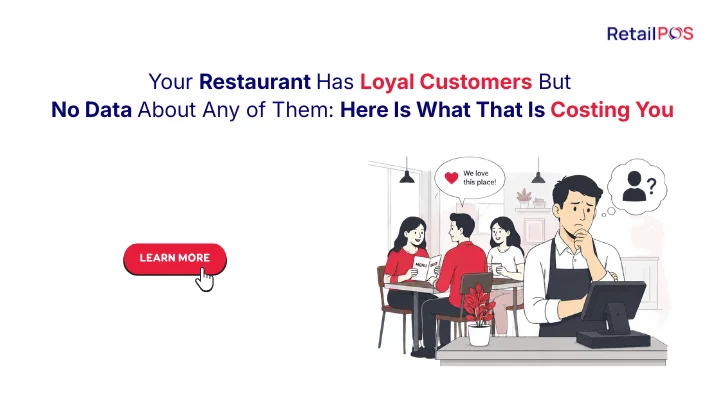
You know his face. He comes in every Thursday evening, always sits at the same table near the window, always orders the butter chicken with garlic naan and a lassi. He has been coming to your restaurant for three years. Your staff recognises him and greets him by name. He brings friends on special occasions. He never complains. He always leaves a tip.
He is your best customer.
And you know almost nothing about him.
You do not know his name in any system. You do not have his phone number. You do not know how much he has spent at your restaurant over three years. You do not know when he last visited, whether his visit frequency has changed recently, or what you could do to make sure he keeps coming back. If he stops coming next month, you will not know he is gone until a few weeks pass and someone on your team mentions that the Thursday window table guy has not been in for a while.
This is the customer data problem that almost every Indian restaurant owner has but almost nobody measures in rupees. You have loyal customers. You just have no data about any of them. And the gap between what you know about your customers and what you could know is one of the most significant untapped revenue opportunities in your restaurant business.
This guide breaks down exactly what that gap is costing you, what restaurants with proper customer data do differently, and how RetailPOS Dineazy gives you the CRM and loyalty infrastructure to turn your regulars from familiar faces into fully understood, highly retained, revenue-generating customer relationships.
2: The Loyal Customer Problem Nobody Talks About
Indian restaurant owners are excellent at creating loyal customers. The combination of consistent food quality, warm service, and the familiarity that builds over months of regular visits creates customer loyalty that is genuinely difficult to manufacture through any marketing campaign. Walk into any successful restaurant in Bengaluru’s Indiranagar, Chennai’s Adyar, or Hyderabad’s Banjara Hills and you will find a core of regulars who have been coming for years and who consider the restaurant their own in a meaningful emotional sense.
This natural loyalty is a genuine competitive asset. It is also almost entirely invisible in the restaurant’s operational data.
Here is the specific nature of the problem. Natural loyalty, the kind that develops from great food and good service, is fragile in ways that restaurant owners rarely appreciate until it breaks. A regular customer’s loyalty is built on a combination of habit, positive association, and the absence of a compelling reason to go somewhere else. Any of these three foundations can shift without warning.
A new restaurant opens two streets away. The customer’s office relocates. A family change shifts their routine. A single disappointing experience that went unaddressed tips the balance. A competitor runs a promotion that gives the regular customer a reason to try something new. Without any customer data, you cannot detect any of these threat signals. You cannot reach out before the customer drifts. You cannot respond to a disappointing experience you do not know happened. You cannot make your Thursday window table customer feel recognised and valued beyond the in-dining interaction he has with your floor staff.
The restaurant across the street that opened six months ago has a QR code on every table that captures customer phone numbers, tracks every order against a customer profile, sends a WhatsApp message after every fifth visit, and knows immediately when a regular customer has not visited in 14 days. They are not a better restaurant than yours. They just know their customers better than you know yours.
3: What You Do Not Know About Your Best Customers Is Costing You Money
Let us be specific about the information gap. Here is what you do not know about your customers right now and why each piece of missing information has a direct rupee cost.
You Do Not Know Who Your Top 20% of Customers Are
In most Indian restaurants, 20% of customers generate 60% to 70% of revenue. These are your high-frequency, high-value customers. Without a CRM system, you cannot identify who these people are, how often they visit, what their average transaction value is, or how their behaviour is trending over time. You cannot prioritise your service, your loyalty rewards, or your re-engagement marketing toward the customers who generate the most value because you do not know who they are in any system.
You Do Not Know When a Regular Customer Stops Coming
Customer churn in restaurants is almost entirely invisible without data. A customer who visited every week for two years and then stopped visits will not send you a goodbye message. They will simply stop appearing. Without a system that tracks visit recency, you have no way to detect that a previously regular customer has gone silent. The average Indian restaurant loses 20% to 30% of its customer base to churn every year. Most of this churn is preventable if detected early enough to trigger a re-engagement communication.
You Do Not Know What Your Best Customers Order
If you knew that your Thursday window table customer always orders butter chicken and garlic naan but has never tried your mutton biryani, you could send him a personalised WhatsApp message on Wednesday saying his usual table is available Thursday and that the chef recommends a new dish he might enjoy. This kind of personalised communication has dramatically higher engagement rates than generic promotional messages. But it is only possible if you have order history data linked to a customer profile.
You Do Not Know When to Reach Out
Without visit frequency data, your marketing is either generic broadcast or silent. You send the same Diwali promotion message to every customer on your list regardless of whether they visited last week or six months ago. You do not know which customers are overdue for a visit and would respond positively to a personalised re-engagement message. You are marketing by volume instead of by intelligence.
You Do Not Know Why Customers Are Not Coming Back
Customers who visit once and do not return are one of the most valuable data points in a restaurant business because they represent a conversion failure that you can fix. Without data linking the first visit to the absence of a second, you cannot even quantify this problem let alone diagnose and address it. A restaurant that captures first-time customer data can send a follow-up message 48 hours after a first visit, inviting a return visit and gathering feedback if one is not forthcoming.
4: The Real Rupee Cost of Having No Customer Data in Your Restaurant
This section puts specific rupee figures on the revenue impact of having no customer data. These calculations are based on scenarios typical for Indian restaurant operations in Bengaluru, Chennai, and Hyderabad.
Scenario: A Mid-Range Restaurant in Bengaluru’s Koramangala
Average covers per day: 80 Average spend per cover: Rs 450 Monthly revenue: approximately Rs 10.8 lakh Estimated loyal customer base visiting twice or more per month: 120 customers
Cost 1: Undetected Customer Churn
Industry pattern shows that restaurants without re-engagement systems lose approximately 25% of their regular customer base per year to undetected churn. For this restaurant, that represents 30 regular customers per year who stop visiting without any re-engagement attempt.
If each of these 30 customers visited twice per month at Rs 450 average spend, their annual value was: 30 customers x 2 visits x 12 months x Rs 450 = Rs 3.24 lakh per year in lost revenue from undetected churn alone.
With a basic re-engagement system that detects absence after 21 days and sends a personalised WhatsApp message, industry data consistently shows that 30% to 40% of drifting customers return. Recovering just 10 of these 30 customers saves: 10 customers x 2 visits x 12 months x Rs 450 = Rs 1.08 lakh per year from churn recovery.
Cost 2: No Upsell From Order History Intelligence
A restaurant that knows its top 50 customers by name and order history can run targeted upsell campaigns. Offering a new menu item to customers who regularly order the category it belongs to generates average additional spend of Rs 80 to Rs 120 per visit for customers who accept the recommendation.
For 50 high-frequency customers visiting twice per month with an incremental Rs 100 spend from personalised upsell recommendations: 50 customers x 2 visits x 12 months x Rs 100 = Rs 1.2 lakh per year in additional revenue from order intelligence.
Cost 3: No Birthday and Anniversary Campaigns
Restaurants that capture customer birthdays and send a personalised birthday offer typically see 45% to 60% redemption rates because the timing is personally relevant. For a database of 500 customers with birthdays distributed across the year, approximately 42 customers have birthdays in any given month.
If a birthday offer generating an incremental visit from 50% of birthday customers: 42 birthdays x 50% redemption x Rs 500 average birthday visit spend x 12 months = Rs 1.26 lakh per year from birthday campaign revenue alone.
Total Identified Revenue Opportunity for This One Restaurant:
Revenue Opportunity | Annual Value |
Churn recovery from re-engagement | Rs 1.08 lakh |
Upsell from order history intelligence | Rs 1.20 lakh |
Birthday and anniversary campaigns | Rs 1.26 lakh |
Referral programme from identified loyalists | Rs 0.80 lakh |
Total identifiable annual revenue opportunity | Rs 4.34 lakh |
For a restaurant generating Rs 10.8 lakh per month, Rs 4.34 lakh per year represents approximately 3.3% of annual revenue that is currently invisible and uncaptured because there is no customer data system in place.
For a larger restaurant in Hyderabad’s Jubilee Hills generating Rs 25 lakh per month, the same proportional calculation represents over Rs 10 lakh per year in uncaptured revenue from customers the restaurant already has.
5: What Restaurants With Customer Data Do Differently
The restaurant down the street that seems to always be full, that has a visible stream of returning customers, that runs promotions that actually work, is almost certainly doing these five things that restaurants without customer data cannot do.
They Know Their Best Customers by Name and Profile
Not just faces. Profiles. A customer profile in a restaurant CRM includes name, phone number, visit frequency, average spend per visit, favourite dishes, dietary preferences or restrictions noted from past orders, birthday, and the date and amount of their most recent visit. Every interaction with this customer is informed by this profile.
They Reach Out Before Customers Drift
When a customer who normally visits every week has not appeared for 12 days, the system flags it automatically. A personalised WhatsApp message goes out: “Hi Priya, we have not seen you in a while. Your favourite table is waiting. Come in this week and enjoy a complimentary dessert on us.” This message arrives before the customer has fully drifted. The emotional connection is still warm. The return rate from these messages is high precisely because the timing is right.
They Make Every Customer Feel Recognised
When a customer walks in and the staff can see from the POS system that it is their fifth visit this month and their usual order is butter chicken and garlic naan, the greeting changes from generic to personal. “Welcome back. The usual tonight?” This personalisation does not require the staff member to have a perfect memory. It requires a system that surfaces the relevant customer information at the point of service.
They Run Campaigns That Are Relevant Not Random
Instead of sending a generic promotional message to every customer, restaurants with CRM data send targeted campaigns. Customers who have not visited in 30 days get a re-engagement offer. Customers who regularly order vegetarian dishes get the new vegetarian menu announcement. Customers celebrating a birthday get a personal message with a relevant offer. The campaign list is always segmented by behaviour, not just by presence in a phone number database.
They Measure Loyalty Programme Effectiveness
They know how many customers are enrolled in the loyalty programme, what percentage are active, what the average redemption rate is, which reward tiers drive the most repeat visits, and what the programme costs versus the revenue it generates. Without this measurement, a loyalty programme is a cost centre. With it, the programme is a managed, optimised retention investment.
6: The Five Customer Insights Every Indian Restaurant Owner Needs
These are the five specific data points that transform a restaurant owner’s understanding of their customer base from impressionistic to precise.
Insight 1: Visit Frequency Distribution
How many customers visit once per month, twice per month, or more than four times per month? This distribution tells you the shape of your loyalty base and identifies the segments most worth investing in. A restaurant where 80% of customers visit once and never return has a different problem than one where 40% of customers visit four or more times per month.
Insight 2: Revenue Concentration
What percentage of customers generate what percentage of revenue? In most Indian restaurants, the top 20% of customers by visit frequency generate 60% to 70% of revenue. Knowing exactly who these customers are allows you to protect them with specific loyalty recognition, personalised service, and proactive re-engagement when visit frequency drops.
Insight 3: Recency of Last Visit
How long ago did each customer last visit? Customers can be segmented into active, at-risk, and lapsed categories based on this data. Active customers receive appreciation campaigns. At-risk customers receive re-engagement outreach. Lapsed customers receive win-back offers. Without recency data, all three groups receive the same generic communication or no communication at all.
Insight 4: Average Order Value by Customer
Which customers consistently spend above your average ticket value and which consistently spend below? High-value customers who visit regularly are your most important retention targets. Understanding their order patterns allows personalised upsell recommendations that increase their already above-average spend further.
Insight 5: Response Rate to Campaigns
Which campaign types, WhatsApp messages, SMS offers, birthday promotions, and loyalty point reminders, generate the highest response rates from which customer segments? This data allows continuous improvement of your marketing investment, directing spend toward the campaign types and customer segments that generate the highest return.
7: Why Traditional Loyalty Cards and Manual Systems Fail
Many Indian restaurant owners have attempted some version of a loyalty programme. A stamp card that gives a free meal after ten visits. A handwritten register of regular customer phone numbers. A WhatsApp group for loyal customers. These efforts reflect a genuine desire to build customer relationships. They fail for consistent and predictable reasons.
Stamp cards are easily lost, easily forgotten, and generate no data. The customer who has collected seven stamps on a card they left at home is not engaged by the loyalty programme. They are merely inconvenienced by it. The restaurant learns nothing from a stamp card because there is no data linkage between the card, the customer identity, the order history, and the visit frequency.
Manual phone number registers capture contact information but nothing else. You can send a mass WhatsApp message to everyone on the list but you cannot segment by behaviour, personalise by order history, or trigger automated messages based on visit recency. The list is a broadcast tool, not a relationship tool.
WhatsApp groups for loyal customers start with enthusiasm and fade within months because managing a group manually is time-intensive, the communication quality degrades into generic broadcast messages, and there is no system linking group membership to actual visit data.
The common failure in all of these approaches is the same. They are manual systems in a business that generates digital data automatically at every transaction. Every time a customer pays at your billing terminal, a transaction is recorded. The question is whether that transaction is linked to a customer identity and added to a growing profile, or whether it disappears into an undifferentiated daily total that tells you how much you collected but nothing about who paid it.
8: What a Modern Restaurant CRM Actually Looks Like in Practice
A modern restaurant CRM is not a separate software application that your manager logs into once a week to send marketing messages. It is a customer data layer embedded in your restaurant’s billing and operations system that captures, organises, and acts on customer information automatically as part of the normal daily workflow.
Here is what this looks like in a restaurant operating on a proper CRM-integrated system:
A customer visits for the first time. At billing, the cashier captures their mobile number. The system creates a customer profile linked to the transaction, recording the date, time, items ordered, and amount spent. The customer receives an automatic WhatsApp welcome message with their loyalty programme enrolment confirmation and their current point balance.
The customer visits again two weeks later. The cashier enters their mobile number and the system immediately surfaces their profile: name, previous visit date, order history, and loyalty balance. The cashier greets them by name. The transaction is added to their growing profile.
After the customer’s fifth visit, the system automatically triggers a personalised WhatsApp message thanking them for their loyalty and informing them that they have earned enough points for a free dessert on their next visit.
The customer does not visit for 25 days, which is longer than their typical 12-day visit frequency. The system flags them as at-risk automatically. A personalised re-engagement message is triggered: their name, a reference to their favourite dish, and a time-limited offer to bring them back.
The customer’s birthday approaches. The system sends a birthday message with a personalised offer three days before the date. The customer visits for their birthday dinner, bringing three friends, and redeems the birthday offer.
Every interaction in this sequence is data-driven, automated, and personalised. The restaurant’s manager did not manually track any of it. The system did.
9: City Scenarios: Chennai, Bengaluru, and Hyderabad Restaurant Examples
Chennai: A Family Restaurant in Adyar
A family restaurant in Adyar, Chennai serves a core customer base of local residents who visit for weekend lunches and special occasion dinners. The restaurant has been operating for eight years and has excellent food and warm service. The owner knows many regulars by face but has no CRM system.
Without customer data, the restaurant’s Pongal promotion is a generic WhatsApp broadcast to a list of phone numbers that have been collected informally over years. The message is the same for every recipient regardless of how recently they visited or how much they typically spend. Response rate is low. The owner cannot tell whether the promotion worked because there is no way to link promotion recipients to actual visits during the promotion period.
With RetailPOS Dineazy CRM, the Pongal promotion is sent only to customers who visited in the previous 60 days, personalised with the customer’s name and a reference to a dish they have previously ordered that features on the Pongal special menu. Customers who have not visited in 30 to 60 days receive an additional re-engagement incentive. The system tracks which message recipients visited during the promotion period, giving the owner a precise measurement of the promotion’s revenue impact.
Bengaluru: A QSR Chain in Koramangala and Indiranagar
A quick service restaurant chain with two outlets in Koramangala and Indiranagar, Bengaluru serves a large lunchtime IT workforce customer base. The chain has high transaction volumes with many repeat customers but no system linking transactions to individual customer identities.
Without CRM data, the chain cannot tell whether the same customer is visiting both outlets or whether the customer bases at the two locations are entirely distinct. They cannot identify their most valuable customers across the chain. A customer who spends Rs 300 per day on weekday lunches for 200 working days per year is worth Rs 60,000 annually to the chain, but this customer is invisible in the transaction data because there is no customer identity linking their daily visits.
With RetailPOS Dineazy CRM, the chain identifies its top 100 customers by annual spend across both outlets within the first month of implementation. The loyalty programme is chain-wide, so points earned at Koramangala are redeemable at Indiranagar. The top 100 customers receive personalised recognition and exclusive offers that their spending level justifies. Customer retention among the identified top tier is measurably higher than retention in the general customer base.
Hyderabad: A Multi-Cuisine Restaurant in Jubilee Hills
A multi-cuisine restaurant in Jubilee Hills, Hyderabad serves both a regular local customer base and event and celebration bookings. The restaurant has a reputation for celebration events, anniversaries, and business dinners. The owner has a vague sense that many of the same families use the restaurant for multiple celebration occasions across the year but has no data to confirm or quantify this.
Without CRM data, the restaurant misses the opportunity to market specifically to customers who have previously used the restaurant for a celebration. A customer who celebrated a birthday dinner at the restaurant last October is a highly qualified prospect for an anniversary dinner this February, but only if the restaurant knows the customer visited in October, has their contact information, and has a system to reach out proactively.
With RetailPOS Dineazy CRM, the restaurant identifies its celebration occasion customers, captures the occasion type where possible, and runs targeted campaigns in the weeks before significant annual dates. Anniversary reminders to couples who celebrated at the restaurant the previous year. Corporate event follow-ups to business customers who booked group dinners. Birthday reminders to customers approaching the anniversary of their last birthday visit. Each of these campaigns is only possible because the customer data exists in a system that can act on it intelligently.
10: How RetailPOS Dineazy Solves the Restaurant Customer Data Problem
RetailPOS Dineazy is the restaurant management platform built by RetailPOS specifically for Indian food service businesses. The Dineazy CRM and loyalty module is designed to solve the exact customer data problem described throughout this guide, giving Indian restaurant owners the customer intelligence they need to retain their best customers, recover drifting ones, and grow revenue from the customer base they already have.
Here is what RetailPOS Dineazy delivers for restaurant customer data and loyalty management:
Customer Profile Capture at the Point of Billing
Every transaction can be linked to a customer profile through a simple mobile number capture at the billing terminal. No app download required for the customer. No manual register for the staff. The phone number entry at billing is fast enough to be part of the normal payment workflow without slowing down service.
Automatic Order History Tracking
Every transaction linked to a customer profile adds to that customer’s order history automatically. Over time, the system builds a detailed picture of each customer’s preferences, visit patterns, average spend, and favourite dishes without any manual data entry by the restaurant team.
Visit Frequency and Recency Monitoring
The system tracks visit frequency for every enrolled customer and flags customers whose visit recency exceeds their normal pattern. At-risk customers are identified automatically so re-engagement campaigns can be triggered before the customer fully drifts rather than after they have been absent for months.
WhatsApp and SMS Campaign Management
Customer campaigns are sent through WhatsApp and SMS directly from the Dineazy platform. Campaigns can be segmented by visit recency, visit frequency, average spend, order history, birthday, or any combination of these attributes. The campaign manager is simple enough for restaurant owners and managers to operate without marketing expertise.
Loyalty Programme With Points and Rewards
The loyalty programme is embedded in the billing workflow. Points are earned automatically at every transaction and the customer’s balance is communicated through the post-visit WhatsApp message. Redemption is handled at the billing terminal with no separate loyalty card or app required. The programme is fully configurable for points earning rate, redemption thresholds, and reward types.
Birthday and Anniversary Campaigns
The system captures customer birthdays at enrolment and triggers automated birthday campaigns at a configurable number of days before the customer’s birthday. Campaign content, offer type, and timing are configurable by the restaurant management team.
Campaign Performance Reporting
Every campaign’s performance is measured automatically. Open rates, redemption rates, revenue generated from campaign recipients, and cost per redemption are all tracked in the Dineazy reporting dashboard. This measurement transforms the loyalty programme from a cost centre into a measurable, optimisable revenue investment.
Multi-Outlet Customer Recognition for Restaurant Chains
For restaurant chains with multiple locations, Dineazy maintains a unified customer profile that is accessible at every outlet. A customer who visits the Koramangala outlet on Monday and the Indiranagar outlet on Thursday is recognised as the same customer at both locations. Their loyalty points are unified across the chain and their profile is visible to staff at any location they visit.
11: What Changes When You Know Your Customers
The transformation from not knowing your customers to having complete customer data is not just a technology change. It is a fundamental shift in how a restaurant operates its relationship with the people who keep it in business.
Here is what specifically changes when RetailPOS Dineazy gives you complete customer visibility:
Your best customers feel recognised beyond their in-dining interaction. They receive birthday messages that feel personal because they reference their actual name and dining history. They receive loyalty rewards that acknowledge their patronage in a tangible way. They feel like valued members of a community rather than anonymous transaction sources.
Your marketing budget stops being wasted on broadcast communications that reach disengaged customers with the same intensity as highly loyal ones. Every campaign is targeted, every message is relevant, and every rupee of marketing spend is directed toward the customer segments most likely to respond.
Your churn becomes visible and preventable rather than invisible and inevitable. You know which customers are at risk before they are gone. You have a system to reach them. And you have the data to personalise the outreach in a way that is far more effective than a generic promotional message.
Your revenue from existing customers grows without requiring a single new customer to walk through your door. More visits from existing customers. Higher average spend from personalised upsell recommendations. More frequent visits from customers who feel recognised and rewarded for their loyalty. This is the revenue that is sitting in your current customer base right now, invisible and uncaptured because there is no system to surface it.
12: Conclusion
Your Thursday window table customer has given you three years of consistent business. He has brought friends on special occasions, never complained, and always left a tip. He is your best customer in every meaningful sense.
And if he stops coming next month, you will not know why. You will not know when he started drifting. You will not have his phone number to reach out. You will not know that a personalised message referencing his favourite dish and offering a reason to return might have brought him back before the drift became permanent.
This is what having no customer data costs a restaurant. Not just the revenue from customers who leave. The deeper cost of never knowing who your best customers are, never being able to tell them they matter, and never building the kind of data-informed loyalty that turns a regular visitor into a customer for life.
RetailPOS Dineazy gives Indian restaurant owners the customer intelligence, loyalty infrastructure, and campaign management capability to turn every regular customer from a familiar face into a fully understood, actively retained, growing revenue relationship.
Book a free demo with the RetailPOS team today and see exactly what your restaurant’s customer data looks like when every transaction is linked to a customer profile, every loyal customer is visible by name and behaviour, and every re-engagement campaign is powered by real intelligence rather than a generic broadcast list.

 Book your demo
 Talk to our POS experts
- 📧 Email: salesenquiry@uniprotech.co.in
Book a free demo and see how RetailPOS Dineazy gives you complete financial visibility across your restaurant operations..
Or WhatsApp our team directly – we respond within minutes.
Or call us at 95662 44611
13. Frequently Asked Questions
Most Indian restaurants generate significant natural loyalty through food quality and service but have no system that captures customer identity at the point of transaction. The billing terminal processes the payment and records the sale amount but does not link the transaction to a customer profile. Over time the restaurant accumulates years of transaction data that tells them how much revenue was generated but nothing about who generated it, how often individual customers visit, what they order, or when they are at risk of drifting. The solution is a CRM and loyalty system embedded in the billing workflow that links every transaction to a customer identity automatically.
For a mid-range Indian restaurant generating Rs 10 lakh per month, the identifiable revenue opportunity from a properly functioning CRM and loyalty system is typically Rs 3 lakh to Rs 5 lakh per year. This comes from three primary sources: recovering customers who are drifting before they fully churn, increasing average spend through personalised upsell communications based on order history, and driving incremental visits through birthday, anniversary, and re-engagement campaigns. The exact figure varies by restaurant type, customer base size, and visit frequency but the opportunity exists in every restaurant that has loyal customers and no data about them.
The easiest starting point is mobile number capture at the billing terminal at the time of payment. No app download, no loyalty card, no separate enrolment process. The cashier asks for the customer's mobile number when processing payment, the number is entered into the system, and the transaction is automatically linked to the customer profile. The customer receives an immediate WhatsApp message confirming their loyalty programme enrolment and point balance. This simple capture mechanism, embedded in the normal billing workflow, builds a customer database from day one without any friction in the service process.
RetailPOS Dineazy maintains a unified customer profile across all outlets in the chain. A customer who enrolls at the Koramangala outlet is recognised by the same profile at the Indiranagar outlet on their next visit. Loyalty points are earned and redeemable at any outlet in the chain. The customer's order history and visit frequency data is consolidated across all locations they have visited. Campaign management covers the entire customer base across all outlets from one central platform, with the ability to segment campaigns by outlet-specific visit history where relevant.
A loyalty card programme captures a participation record at best. A card stamp tells you that a customer visited enough times to earn a reward but gives you no name, no phone number, no order history, no visit frequency data, and no way to reach the customer when they stop coming. A CRM-integrated loyalty system like RetailPOS Dineazy captures full customer identity, links every transaction to that identity, builds a growing profile of visit frequency and order preferences, triggers automated re-engagement campaigns when visit recency exceeds the customer's normal pattern, and measures the revenue impact of every campaign the restaurant runs. The difference between these two approaches is the difference between knowing that a loyal customer exists and knowing who they are, what they value, and how to keep them.
Most restaurants using RetailPOS Dineazy begin seeing measurable results within the first 60 to 90 days of implementation. Within the first 30 days, the customer database begins building as transaction-linked profiles accumulate. Within 60 days, enough visit frequency data exists to identify at-risk customers for re-engagement campaigns. Within 90 days, the first campaign cycle is typically complete and the restaurant can measure redemption rates, recovered customers, and incremental revenue from customers who responded to loyalty communications. Birthday campaigns begin generating results immediately for customers whose birthdays fall within the first months of programme operation. The compounding effect of consistent customer data capture means the system becomes more valuable every month as the database grows and behavioural patterns become clearer.